What Mentoring Rural Women Entrepreneurs Taught Me About the Real Barriers to Business Growth
Over November and December I helped mentor 70 women turning ideas into businesses, across Skopje and Prilep. The barriers holding them back weren't the ones on the grant application - and they're the very same ones I see in companies ten times the size. Here's what mentoring these women taught me about what really blocks growth.
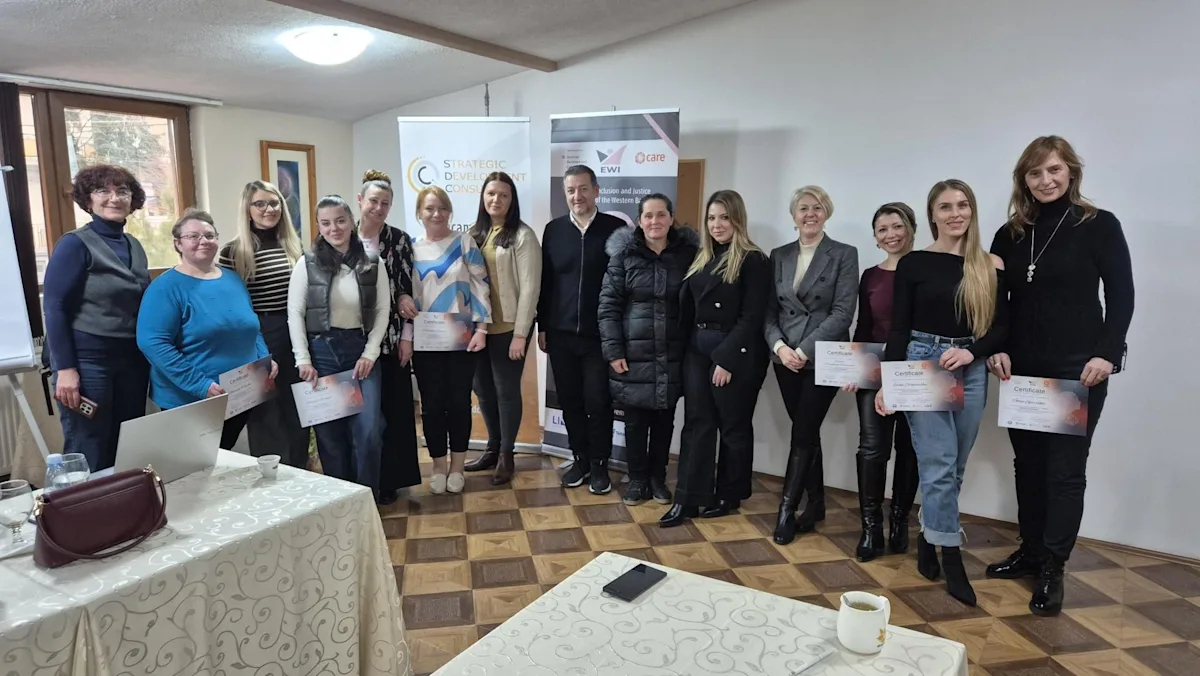
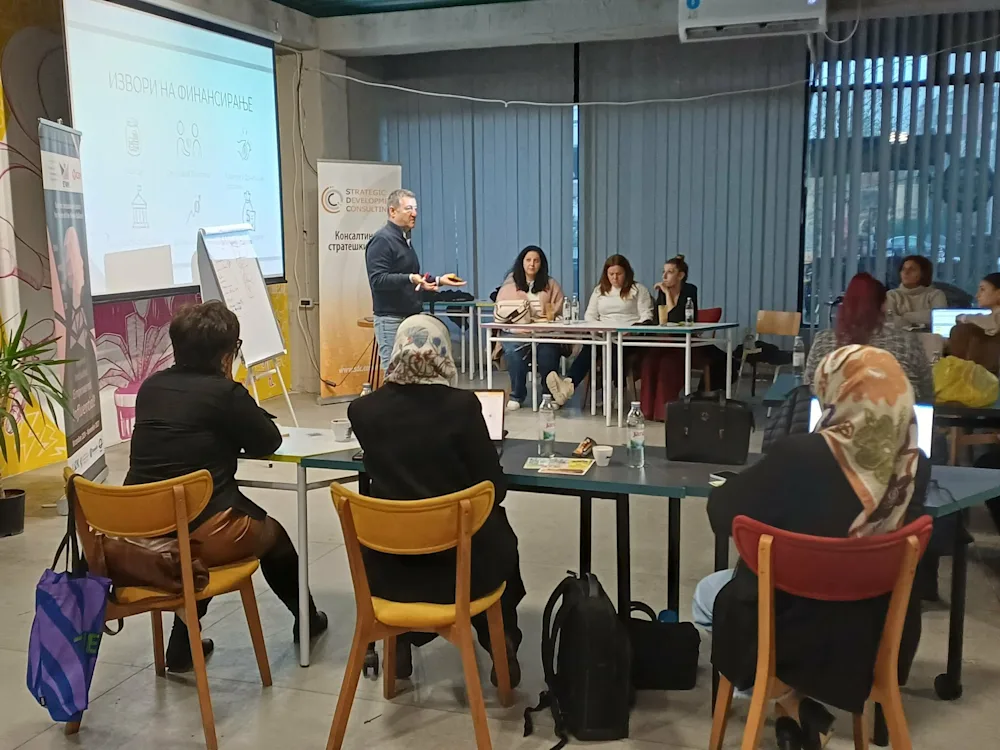
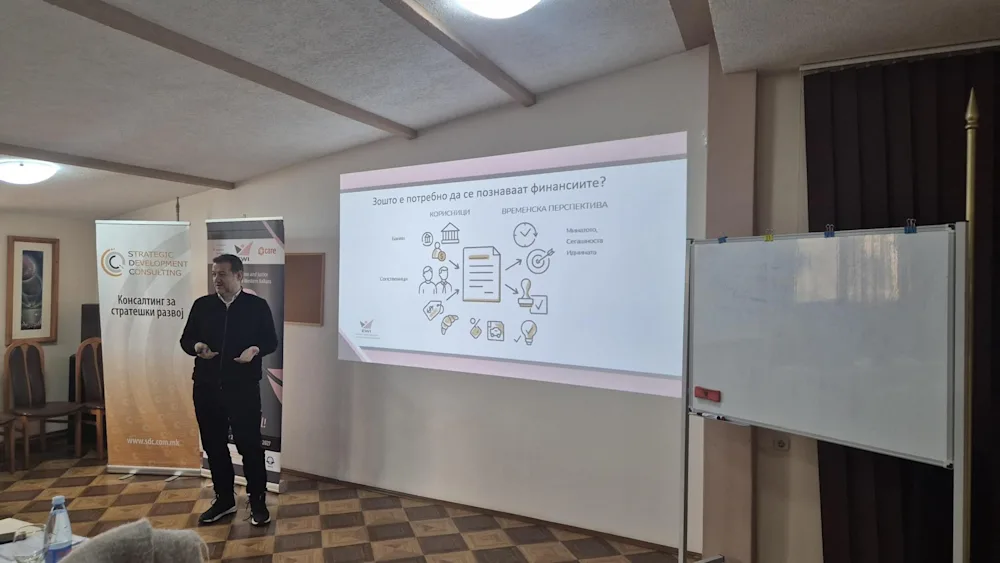
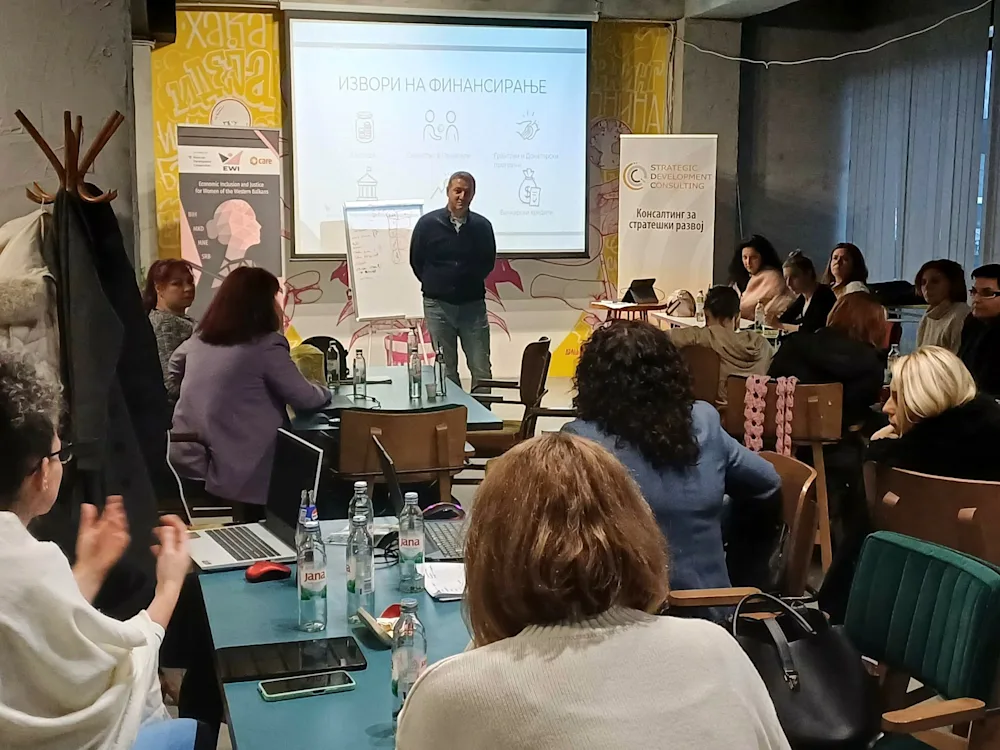
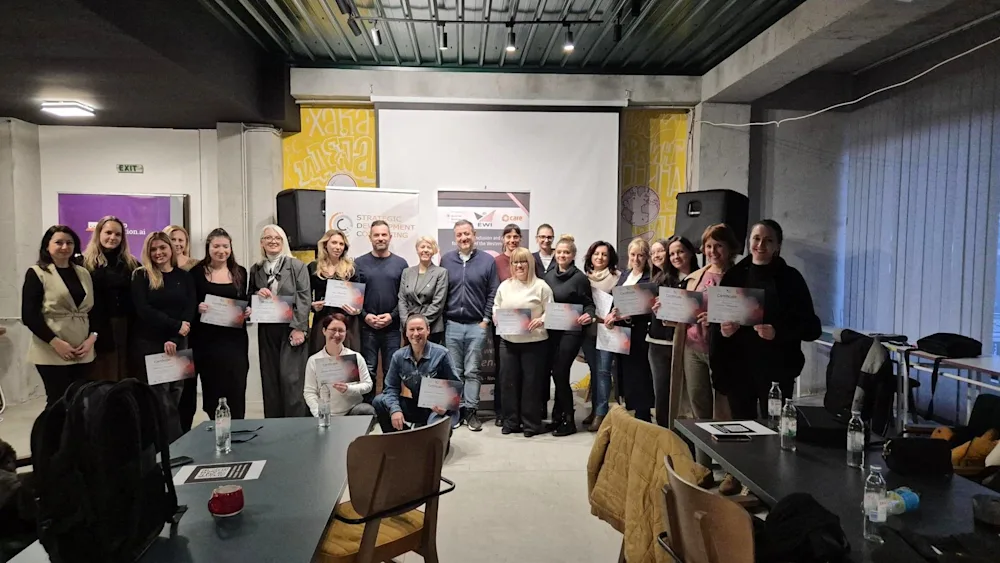
This November and December, I spent four intensive training days with 70 women - in Skopje and Prilep - as a trainer in a women's entrepreneurship program run by Strategic Development Consulting, backed by CARE Balkans and the Austrian Development Agency, alongside Joško Ivanovski. Some were turning a first idea into a business; others already ran small companies. By the end, each had a business plan they could use to compete for a €2,500 or €5,000 grant.
I went in to teach business planning. I came out with a sharper view of what actually blocks growth - because when you sit with 70 founders and read their plans line by line, the real barriers stop being abstract. And almost none of them were the ones you'd write on a grant application.
The barrier is almost never the idea
The applications were full of ideas and energy. What they lacked was structure. In my notes from the first group I kept writing the same phrase: idea-rich but structure-poor. These were capable women with real vocational skills and genuine creativity - but the leap from "I want to open a café" or "I'll produce honey" to who exactly buys this, at what price, and why hadn't been made yet.
That gap isn't a talent problem. It's a framework problem. Give someone a simple way to validate an idea, define a customer, and price it, and the same idea suddenly has a backbone.
They weren't paying themselves
This was the one that stayed with me. Reviewing the business plans, I kept finding the same quiet mistake: the founder's own work wasn't in the numbers. One strong plan - an established coffee roaster with real customers - modelled an operations salary of about €325 and no founder salary at all, while the founder personally did the roasting, quality control, branding, sales and content.
The result is a model that looks more profitable than the business really is. If you don't pay yourself, even on paper, you can't see whether the business actually works - and you quietly subsidise it with your own unpaid time until you burn out. Undervaluing your own labour is one of the most common, most invisible barriers to growth there is.
Money was confused, not just scarce
Access to finance is a real constraint - especially working capital. But the deeper issue I saw wasn't too little money, it was unclear money. Personal and business finances mixed together. Limited sense of startup costs, real prices, or profit margins. Bookkeeping outsourced and never really read.
Capital amplifies whatever it lands on. Pour a grant into a business that doesn't yet know its costs or its most profitable product, and you simply spend it faster. The women who got clear on their numbers first didn't need more money to make progress - they made better decisions with the money they had. It's the same point I made about bigger firms in The Financial Realities Most SME Founders Won't Admit.
"Marketing" meant "post on social media"
Across both groups, marketing was understood narrowly - mostly "we'll post on Instagram" - rather than as deciding who you serve, what makes you different, and how you reach them. Branding was thin and inconsistent. Several had good local traction but no way to reach beyond their town.
Marketing isn't the posting. It's the positioning underneath it. A clear "this is who it's for and why it's better" does more than any amount of content on top of a blurry offer.
The founder was the whole company
Almost every established business in the room ran on one person doing everything - owner, marketer, producer, bookkeeper - usually while balancing a family. There was resilience everywhere, and very little system. No delegation, no documented process, no way for the business to run when the founder steps away.
That's a hard ceiling. A company that depends entirely on one person can only grow as far as that person's hours and energy - which is exactly the bottleneck I see when bigger companies try to scale.
The quietest barrier was confidence
Underneath all of it sat the barrier nobody lists on an application: confidence. Capable, skilled women hesitating to register, to charge a proper price, to call themselves a business. Fear of digital tools. Fear of the whole leap. The needs assessment named these "soft barriers" - confidence, time management, self-organisation - and they gate the technical ones. You can teach a pricing formula in an hour; helping someone believe they're allowed to charge it is the harder, more important work.
Watching 70 women cross that line - and walk out with a finished plan and a certificate - was the best part of the whole program.
These aren't "women's" or "rural" problems. They're business problems.
Here's what struck me most. Strip away the context, and the barriers these women faced are exactly the ones I see in companies ten and a hundred times their size: no clear structure, finances that are murky rather than missing, marketing that's activity without positioning, a founder who's become the bottleneck, and decisions held back by fear instead of facts. The only real difference is scale.
That's oddly encouraging. It means the barriers to growth aren't mysterious or personal - they're structural, they're visible the moment you look honestly, and they're fixable. A grant helps. But clarity is what actually moves a business forward, at every size.
What to do next
If your business feels stuck, the most useful question isn't "where do I find money or a better idea?" It's the harder one: what's the real barrier here? It's usually structure, clarity, positioning, focus, or confidence - not capital.
That honest look is exactly what a Business Pulse diagnostic is built to give you - the same one we'd run on a 50-person company, because the barriers turn out to be the same. To the 70 women I worked with: thank you for the reminder that the fundamentals are universal - and that the bravest business move is often just deciding to begin.