Competence vs Process: The Two Things That Make a Consultant Worth Trusting (CMC and ISO 20700)
This week I completed the ISO 20700 training - the international guidelines for management consultancy services. It crystallised something about hiring a consultant: there are two separate questions a client should ask. One is about competence, the other about process. I hold both answers - the CMC certification and now ISO 20700 - and here's why each matters, and why you want a consultant who has them together.
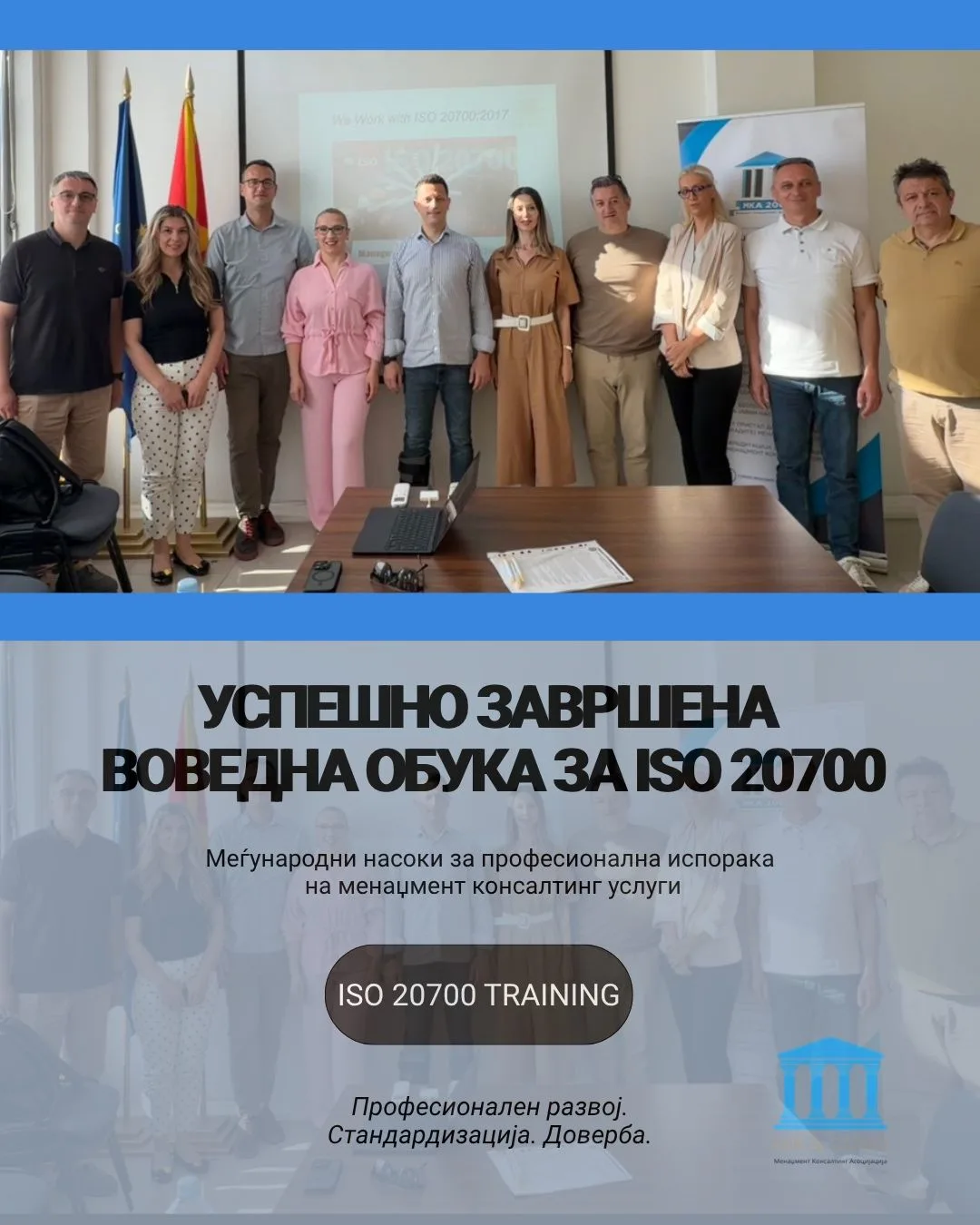
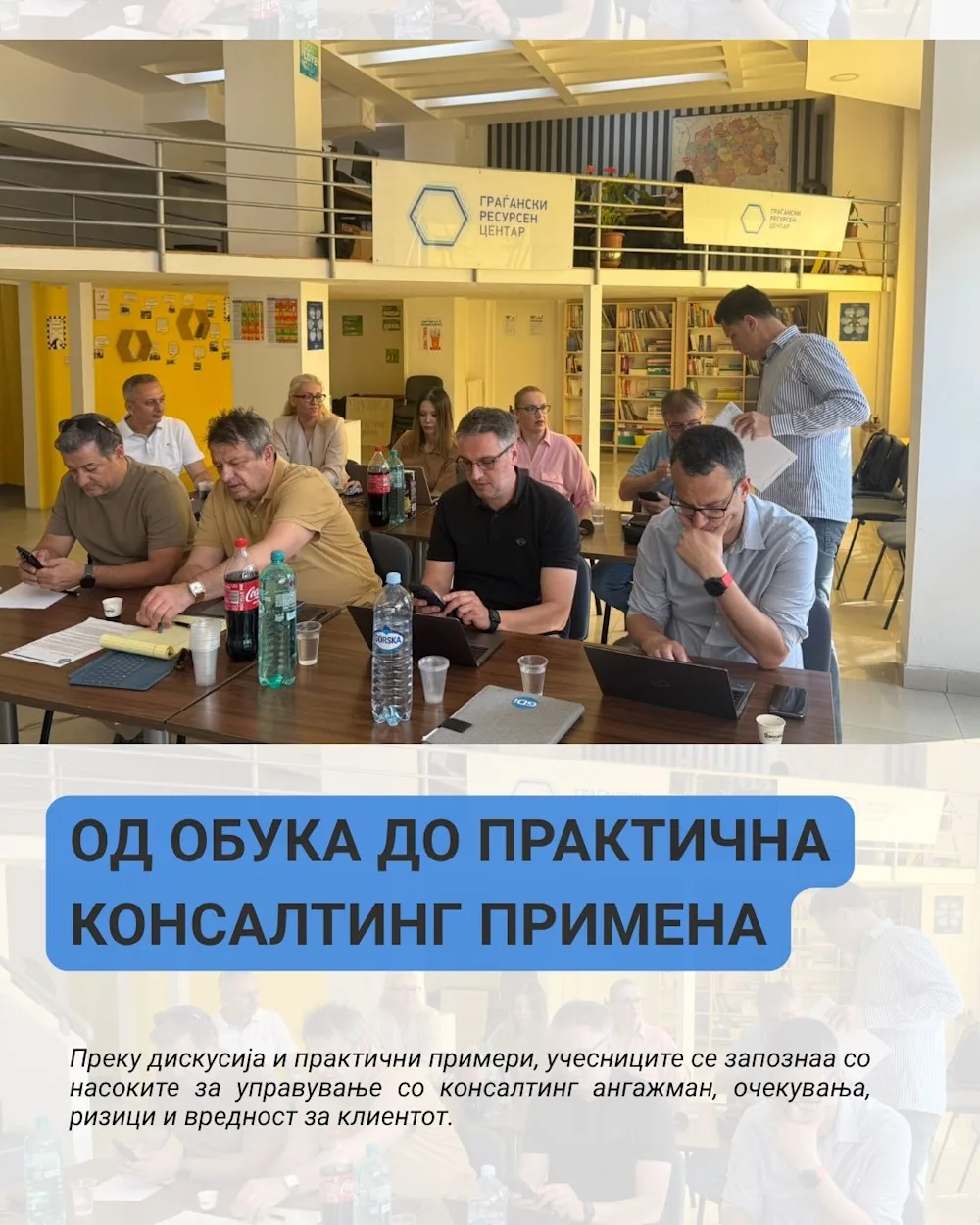
This week I completed the two-day introductory training in ISO 20700 - Guidelines for Management Consultancy Services, organised by MCA 2000 (the Management Consulting Association, IMC Macedonia) and led by Aleksandar Celeski. Two evenings of principles, practical examples and a lot of comparing notes with other consultants.
It also clarified something I've believed for a while: when you hire a consultant, you're really asking two separate questions - and most people only ask one.
The two questions clients should ask
The first question is about competence: is this person actually good enough to solve my problem? Do they have the skills, the judgement, the experience?
The second is about process: will the engagement itself be run properly? Will the scope be clear, the expectations managed, the risks named, the delivery structured, and the whole thing closed out cleanly - or improvised as it goes?
Both matter enormously. And they're answered by two very different things.
CMC: the competence half
Before ISO 20700, there's a more fundamental credential I hold and care deeply about: the Certified Management Consultant (CMC). If ISO 20700 answers "is the engagement run properly?", CMC answers the first question - "is this person actually qualified to advise you?"
CMC is the only internationally recognised certification for management consultants, awarded through ICMCI (the International Council of Management Consulting Institutes) and its national member institutes - in Macedonia, MCA 2000. The key word is competence-based: you don't earn it by attending a course or passing a quiz. You're assessed by peers, against an international competence framework, across three things:
- Proven competence - you have to demonstrate real consulting ability, not theory: how you diagnose problems, design solutions and deliver results, evaluated against a defined professional standard.
- Real experience - a genuine track record of client engagements, backed by client references that are actually checked. It certifies someone who has done the work, repeatedly, with results, not someone who has merely studied it.
- Ethics and ongoing development - you commit to an international code of professional conduct, and you have to keep learning to keep the title (continuing professional development). It's not a one-time badge; it lapses if you stop growing.
In short, CMC is a client's assurance that the individual they're trusting with their business is genuinely capable, experienced and accountable, not just confident. It's held by a small fraction of consultants, which is rather the point.
ISO 20700: the process half
ISO 20700 is not a product-quality certificate, and it's not about how clever the consultant is. It's a process-based international guideline for how a management consultancy engagement should be run - from inception to close. It standardises the consulting process so a client gets a professional, transparent, repeatable experience regardless of who they hire.
It organises the engagement into three clear phases:
- Contracting - understanding the real need, scoping the work, agreeing clear objectives, deliverables and roles, and naming expectations and risks up front, not discovering them later.
- Delivering - managing the assignment as it runs: communication, progress, handling changes, and transferring knowledge to the client so the value stays after the consultant leaves.
- Closing - completing the deliverables, evaluating the results, gathering feedback and lessons, and formally closing the engagement instead of letting it fade out.
The point of all of it is to manage expectations and risk, and to build trust, so the value a consultant delivers is real, structured and long-term, not a matter of luck.
Why you want both
Here's the synthesis that stuck with me. Competence without process is a talented consultant whose engagements are unpredictable: fuzzy scope, drifting expectations, surprises at the end. Process without competence is a tidy, well-documented wrapper around weak advice. Neither is good enough on its own.
A client deserves both: a consultant who is genuinely capable and who runs the engagement to a professional standard. CMC certifies the first. ISO 20700 structures the second. Together, they're a fair definition of a consultant worth trusting.
How this shows up in our work
This is also why a Business Pulse diagnostic is a defined process, not a freestyle conversation: a clear inception and scope, a structured diagnosis across the business, a prioritised action plan, and a clean handover, the same engagement discipline ISO 20700 describes, paired with the competence the work demands. It's the same reason that, when choosing any advisor, how they run the engagement matters as much as their CV.
What to do next
If you're about to hire a consultant, ask both questions out loud. On competence: what are their credentials and track record, is the person a Certified Management Consultant, and can they show real results? On process: how do they scope, contract, deliver and close, and will you know what to expect at each stage? A consultant worth their fee will have a confident answer to both.
Thanks to Aleksandar Celeski for leading the training, and to MCA 2000 for continuing to raise the professional standard of consulting in the region.