
The 7-Step Business Diagnostic Framework: How to Find What's Actually Holding Your SME Back
Most founders can feel that something is off, but can't name it. A business diagnostic replaces the guessing with a clear picture. Here is the 7-step framework Natasha Razmoska and I shared at Global Entrepreneurship Week 2025: how it finds the real problem, the 12 areas it examines, and the clarity it delivers in 90 days.
Most founders run their company with a quiet, nagging feeling that something isn't right. Profit is thinner than it should be. A department keeps missing. Growth has stalled and no one can say exactly why. But when you ask what the actual problem is, the answers get vague fast.
That isn't a failure of intelligence. It's a failure of visibility. You're making decisions on scattered data, half-remembered numbers, and gut feel. The numbers say one thing, your intuition says another, and you end up making calls that "felt right at the time." It's like driving in fog: you're moving, but you can't see far enough ahead to steer with confidence.
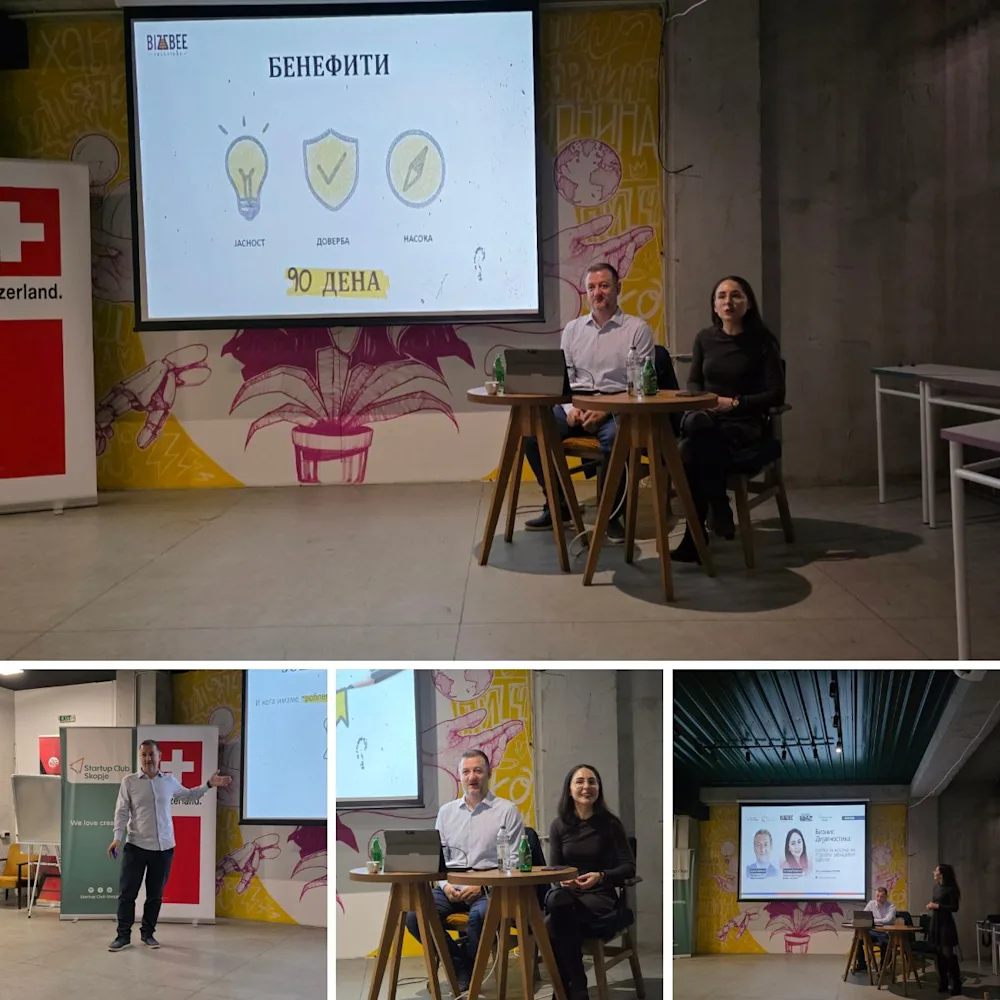
This is the problem Natasha Razmoska and I opened at Global Entrepreneurship Week 2025 - the question every business feels but rarely voices: what is really happening inside our company, and how do we find the real problems? Our answer was a 7-step business diagnostic framework that moves a company from assumptions to evidence, from reactive firefighting to structured decisions, and from "we think we know" to "now we finally see the full picture."
You can't fix, or grow, what you can't see
Here's the trap. When something hurts, founders jump straight to a fix. Sales are down, so we hire a salesperson. Margins are thin, so we cut a cost. But if you treat the symptom without finding the cause, you spend money and energy and the problem comes back wearing a different shirt.
And it's not only about problems. Say things are going well and you want to grow. There are really only four ways to do it: sell more of what you have to the customers you have, take what you have into new markets, build new products for your existing market, or do something genuinely new. Every one of those is a big bet. And you cannot make a sound growth decision without knowing where you actually stand today.
So whether you're fixing a problem or chasing an opportunity, the first step is the same. Not action. Diagnosis. Clarity before action. A diagnostic turns scattered data into insight, and insight into decisions you can defend.
The 7-step framework
A good diagnostic isn't a hunch or a one-day audit. It's a structured process that moves from a wide, honest look to a prioritized plan. Here are the seven steps.
1. Discovery. It starts with the owner and the leadership team. What does the business do, where does it want to go, what does "good" look like, and where does it hurt? This is the starting picture, in the company's own words.
2. Secondary data. Next, gather what already exists: financials, reports, KPIs, contracts, whatever the business already has. Most companies are sitting on numbers they've never actually read together. This is where they start to talk.
3. External research. Then look from the outside in: the market, the competitors, and the customers. How does the company look to the people who buy from it, and to the ones who chose someone else? The inside view is never the whole truth.
4. Hypotheses. With that picture, you form testable theories about the real problem, not the obvious symptom. "We think the bottleneck isn't sales, it's that marketing and sales aren't talking, so good leads go cold." Hypotheses give the rest of the work a target.
5. Interviews. Now you test those theories with the people who actually do the work. The owner's view, the data, and the front line rarely match perfectly, and the gaps between them are where the real problems hide.
6. Problem prioritization. A company always has more issues than it can fix at once. This step separates root causes from noise and ranks them: what actually moves the needle, and what to fix first. Without it, teams burn out fixing the loudest problem instead of the most important one.
7. Strategy. Finally, the findings become a direction, a clear and prioritized plan for what to do over the next stretch. Diagnosis becomes decision.
The 12 places the truth about your company lives
A diagnostic doesn't poke at one department. It examines twelve areas, because the real problem in one place is often caused by something in another. Together they give a 360-degree picture. Each one answers a question most founders can't answer cleanly off the top of their head:
- Vision & strategy - does your team know the top three priorities this year, or does the strategy live only in your head?
- Market & customers - who is your most profitable type of customer, and do you actually know why they choose you?
- Competition - can you name your top three competitors and what they do better, or is it all "by hearsay"?
- Products & services - which products are genuinely profitable, and which quietly lose money?
- Procurement & suppliers - what's your plan B if a key supplier fails, and are you buying strategically or just "getting it done"?
- Production & logistics - where is time lost, and how do you actually know quality is stable?
- Marketing & sales - which channels bring your best customers, and is every lead followed up systematically?
- Management & HR - does each person have a clear role, or is everyone doing "everything"?
- Finance - do you know exactly what you spend on, and which clients or products make money versus lose it?
- IT - how much time goes to manual work, and what happens if the one person who "knows the system" leaves?
- Innovation & R&D - do you have a system for testing ideas, or do new ideas depend on one or two enthusiasts?
- Governance & compliance - is it all "in the owner's head," and who is actually allowed to sign, approve, and pay?
If reading that list made you uncomfortable on a few lines, that discomfort is the finding. It's the map of where to look.
What you get: clarity, confidence, direction
A diagnostic isn't a report you file and forget. It delivers three things:
- Clarity - you finally see the full picture, not the fragments.
- Confidence - decisions stop being a gamble, because they rest on evidence.
- Direction - you know what to fix first and where to grow next.
And it doesn't take forever. In about 90 days, your company can know exactly where it stands, what drives its performance, what blocks it, and how to grow over the next two years. That's the difference between "we think we know" and "now we finally see the full picture."
What to do next
If any of this sounds familiar, the fog, the vague answers, the decisions made on feel, the move isn't to guess harder. It's to get the full picture, once, properly.
- Pick the discomfort. Which of the 12 areas above made you flinch? Start your thinking there.
- Stop treating symptoms. Write down the last three "fixes" that didn't stick. They're usually symptoms of one deeper cause.
- Get a real diagnosis. A structured Business Pulse diagnostic runs all seven steps across all twelve areas and hands you a prioritized plan, with clarity in about 90 days.
You can't steer out of the fog by driving faster. You steer out of it by seeing clearly first.